

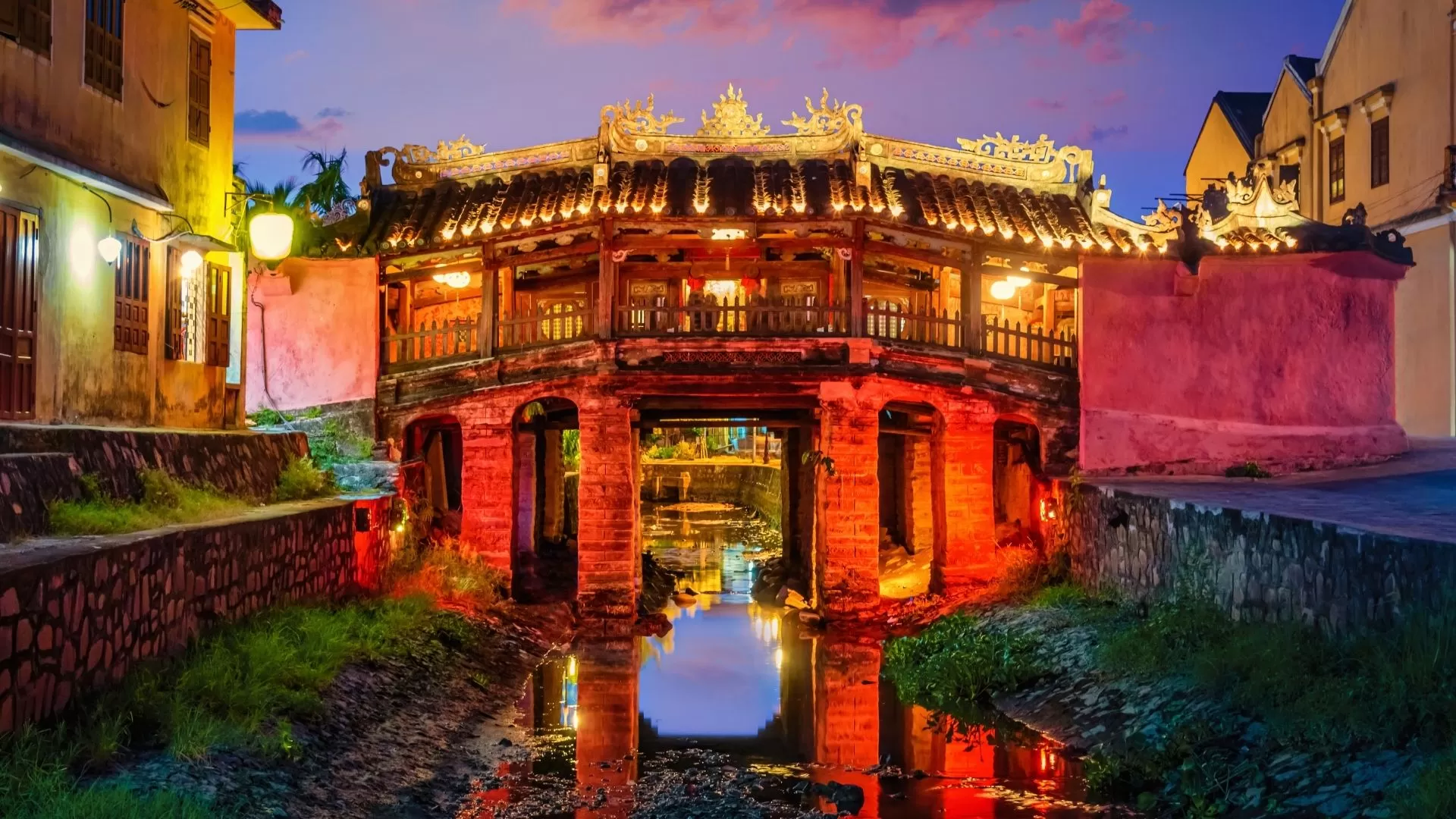
Tucked within the lantern-lit streets of Hoi An Ancient Town, a UNESCO World Heritage Site in Central Vietnam, stands one of the most photographed and culturally significant landmarks in the country—the Japanese Covered Bridge (Chùa Cầu in Vietnamese). More than just a picturesque crossing, this 400-year-old architectural gem is a powerful symbol of Hoi An’s rich multicultural past, blending Japanese craftsmanship with Vietnamese spirituality and Chinese symbolism. For tourists visiting this enchanting town, a visit to the Japanese Covered Bridge is not just a must-see—it’s a journey into the heart of Southeast Asia’s historic trading legacy.
Whether you’re a history buff, a photography enthusiast, or simply a traveler drawn to timeless beauty, the Japanese Covered Bridge offers a captivating experience that embodies the magic of Hoi An.
🌉 What Is the Japanese Covered Bridge?
Commonly known as Chùa Cầu, which translates to “Temple Bridge,” the Japanese Covered Bridge is a covered wooden footbridge that spans a small canal connecting the old Japanese quarter with the Chinese district of Hoi An. Built in the late 16th or early 17th century (circa 1593), it was originally constructed by Japanese merchants who lived and traded in Hoi An during its golden age as an international port.
Despite its name, the bridge is not purely Japanese in design. Over centuries, it has been restored and modified by Vietnamese and Chinese communities, making it a unique fusion of Japanese architecture, Vietnamese religious elements, and Chinese decorative motifs—a true testament to Hoi An’s multicultural identity.
🏯 Architecture & Design: A Masterpiece of Cultural Fusion
The Japanese Covered Bridge measures just 18 meters long and 3 meters wide, but its design is rich in symbolism and craftsmanship.
Key Architectural Features:
- Covered Roof with Tiled Eaves: The bridge is fully covered with a traditional East Asian-style roof, protecting it from tropical rains and giving it its iconic look.
- Wooden Construction: Built using ancient joinery techniques without nails, the structure showcases the advanced carpentry skills of the era.
- Enclosed Walkway: The covered passage creates a quiet, meditative space, perfect for reflection as you cross from one world to another.
- Temple at One End: The northern end of the bridge houses a small shrine dedicated to Trấn Vũ, the Taoist god of the north and protector against evil spirits. This addition was made by the Vietnamese community in the 18th century.
- Guardian Statues: At both entrances, you’ll find stone statues of dogs and monkeys—symbols of the years 1615 and 1629 (according to the Chinese zodiac), believed to be the years the bridge was built and renovated.
Fun Fact: The dog-monkey pairing represents the years when the bridge was constructed and later restored—years that were thought to be plagued by flooding, hence the need for divine protection.
📜 The Legend Behind the Bridge
Local legend adds a mystical layer to the bridge’s history. It is said that Hoi An was once plagued by a mythical river monster that caused devastating floods every 12 years. To trap the creature, the townspeople built the bridge in the shape of a coiled dragon, with the temple acting as its head. The presence of Trấn Vũ, a powerful deity, was meant to keep the monster at bay.
While the monster may be folklore, the real threat was seasonal flooding, and the bridge’s construction and spiritual elements were deeply tied to the community’s desire for safety and prosperity.
📸 Why It’s a Photographer’s Dream
The Japanese Covered Bridge is arguably the most photographed spot in Vietnam, and for good reason. Its photogenic appeal changes with the time of day, offering endless opportunities for stunning shots:
- Morning Light (6:00–8:00 AM): Soft golden light illuminates the yellow walls and red roof, with fewer crowds for unobstructed views.
- Midday Contrast: The vibrant red lacquer of the bridge pops against the blue sky and green water.
- Evening Magic (6:00 PM Onward): As Hoi An dims its electric lights, the bridge glows under traditional silk lanterns, creating a fairytale-like scene.
- Reflections on the Water: The still canal acts as a mirror, doubling the beauty of the structure—perfect for long-exposure photography.
Pro Tip: For the best photos, stand on the south bank of the canal and shoot toward the bridge with the lanterns in the background. Visit during the full moon festival when the entire town is lit by candlelight for an unforgettable shot.
🧭 How to Visit the Japanese Covered Bridge
Location
- Hoi An Ancient Town, Quang Nam Province, Vietnam
- Part of the Hoi An Ancient Town ticket zone (foreign tourists must purchase an entry pass)
Opening Hours
- 24/7 Access, but the bridge is best experienced in the early morning or evening
- The shrine inside is open from 7:00 AM to 5:30 PM
Entry Fee
- Included in the Hoi An Ancient Town Heritage Ticket:
- VND 120,000 (~$5 USD) for 1 day
- VND 180,000 (~$7.50 USD) for 3 days
- Tickets are checked at various points, including near the bridge
Best Time to Visit
- Early Morning (6:00–7:30 AM): Fewer tourists, soft light, peaceful atmosphere
- Evening (6:00–8:00 PM): Lanterns are lit, the bridge is magical, and street performers often gather nearby
- Avoid Midday: Harsh sunlight and large tour groups
🌏 Cultural Significance: More Than Just a Bridge
The Japanese Covered Bridge is not just a tourist attraction—it’s a living symbol of cultural harmony. Hoi An was once a thriving international port where merchants from Japan, China, India, and Europe lived side by side. The bridge stands as a physical reminder of that peaceful coexistence.
- Japanese Influence: The original builders were Japanese traders who settled in Hoi An during the 16th–17th centuries.
- Vietnamese Adaptation: The shrine and protective deities were added by the local community, blending Buddhist and Taoist beliefs.
- Chinese Craftsmanship: Later restorations used Chinese-style tiles and carvings.
This blend of cultures is what makes Hoi An unique—and the bridge its most iconic emblem.
🛍️ What to Do Nearby
After visiting the bridge, explore these nearby attractions:
- Tan Ky Old House: A 200-year-old merchant home with ancestral altars and hidden passages.
- Central Market: Shop for souvenirs, spices, and try local snacks like cao lầu.
- Quan Cong Temple: Dedicated to the Chinese god of loyalty and war.
- Bach Tung Diep Pagoda: A serene Buddhist temple with intricate carvings.
- Lantern-Making Workshops: Create your own silk lantern to take home.
And don’t miss the lantern-lit boat ride on the Thu Bồn River—where you can capture the bridge from the water, glowing like a jewel in the night.
🚗 How to Get to Hoi An & the Japanese Covered Bridge
Most visitors fly into Da Nang International Airport (DAD), located 30 km (40 minutes) away.
From Da Nang:
- Taxi or Grab: ~VND 300,000–400,000 one way
- Private Transfer: Book through your hotel for comfort
- Public Bus: Route 1 costs ~VND 25,000 but takes longer
Once in Hoi An, the bridge is located in the heart of the Ancient Town, just a 5-minute walk from the main market.
🎒 Travel Tips for Visitors
- Respect the Site: The bridge is a functioning cultural and religious site. Keep your voice down and avoid climbing on structures.
- No Smoking or Littering: Strictly enforced in the heritage zone.
- Wear Comfortable Shoes: The streets are cobbled and uneven.
- Visit Early or Late: Avoid the midday rush from tour buses.
- Support Local Artisans: Buy handmade lanterns or postcards from nearby stalls.
- Combine with a Guided Tour: Learn deeper stories about the bridge’s history from a local guide.
🌟 Final Thoughts: A Bridge Between Worlds
The Japanese Covered Bridge is more than a relic of the past—it’s a living connection between cultures, eras, and people. It stands not just as a passage over water, but as a symbol of harmony, resilience, and beauty that has endured for centuries.
For travelers, crossing this bridge is a moment of quiet wonder—a chance to step into history, capture a perfect photo, and feel the soul of Hoi An. Whether you come for the legends, the architecture, or the lantern-lit nights, the Japanese Covered Bridge will leave an indelible mark on your journey through Vietnam.
Plan Your Visit to the Japanese Covered Bridge Today
📍 Hoi An Ancient Town, Quang Nam Province, Vietnam
🎟️ Included in Hoi An Heritage Ticket (VND 120,000+)
📸 Best Photo Times: Sunrise & Sunset
🌙 Don’t Miss: Full Moon Lantern Festival (14th of Lunar Month)
Let the bridge carry you not just across a canal, but through time, culture, and the enduring magic of one of Asia’s most beautiful towns.


 English
 Chinese
 Japanese
 Korean
 Spanish
 German
 French
 Italian